
War memorials
The City of Campbelltown is home to several war memorials that honour the brave men and women who have served in our nation's armed forces.
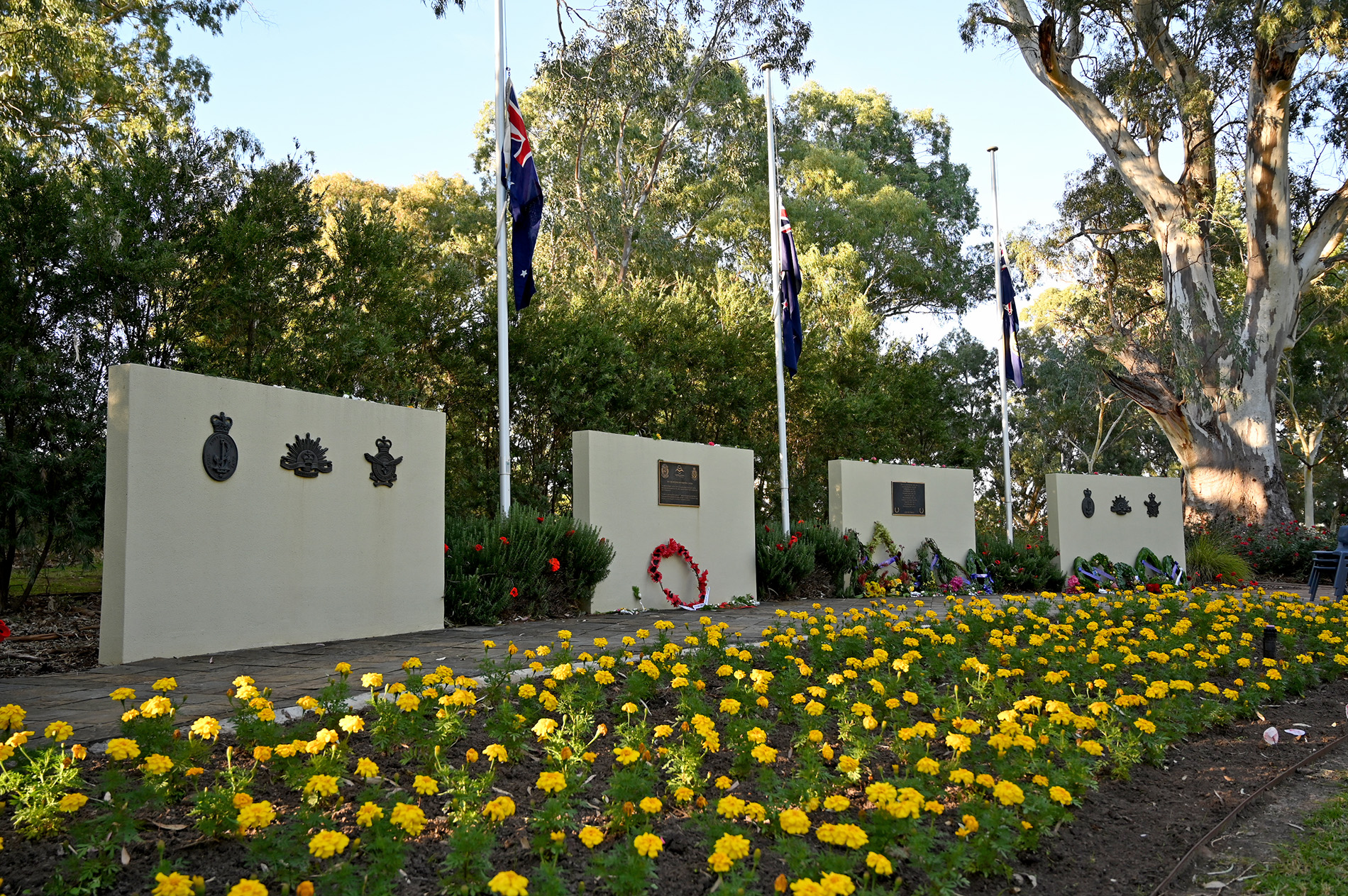
Location: The Gums Reserve, Shakespeare Avenue, Tranmere
Conflicts: All
Dedicated: Tuesday 24 November 2009, by His Excellency Rear Admiral Kevin Scarce AC CSC RAN (Retired), Governor of South Australia
The Gums War Memorial Garden is dedicated to all Australians who served their country in conflict and peace time.
This site was chosen for its peaceful ambience. It offers a place for quiet reflection and remembrance of those who made the supreme sacrifice.
Since its opening, the Gums Reserve War Memorial Garden has become the primary site for remembrance services within the City of Campbelltown.

Location: Corner of Gorge Road and Lower North East Road, Paradise
Conflicts: First World War, 1914–1918
Dedicated: Sunday 5 July 1925, by Brigadier General Stanley Price Weir DSO VD
The Campbelltown Soldiers' Memorial lists the names of 94 of those from the district who served during the Great War, including 14 who made the ultimate sacrifice.
It has historical significance not only as a memorial, but also because of its location at the front of St. Martin's Anglican Church and cemetery, where many descendants of those who served are buried.
The Digger on the Campbelltown Soldiers’ Memorial lost his marble rifle to peace protesters during the Vietnam War, 1962 – 1975. A fibreglass replica, cast by local monumental masons Schubert and Son, replaced the original marble rifle in 1991, as part of extensive repairs to the memorial.
In 2014, the landscaping surrounding the Campbelltown Soldiers’ Memorial received extensive upgrades, partially funded by the Anzac Centenary Local Grants Program. The blue tiling on the top of the concrete base was added to symbolise the horse trough that was originally located at the base of the statue. LED lights were embedded in the grey slate pavers around the memorial to represent stars.
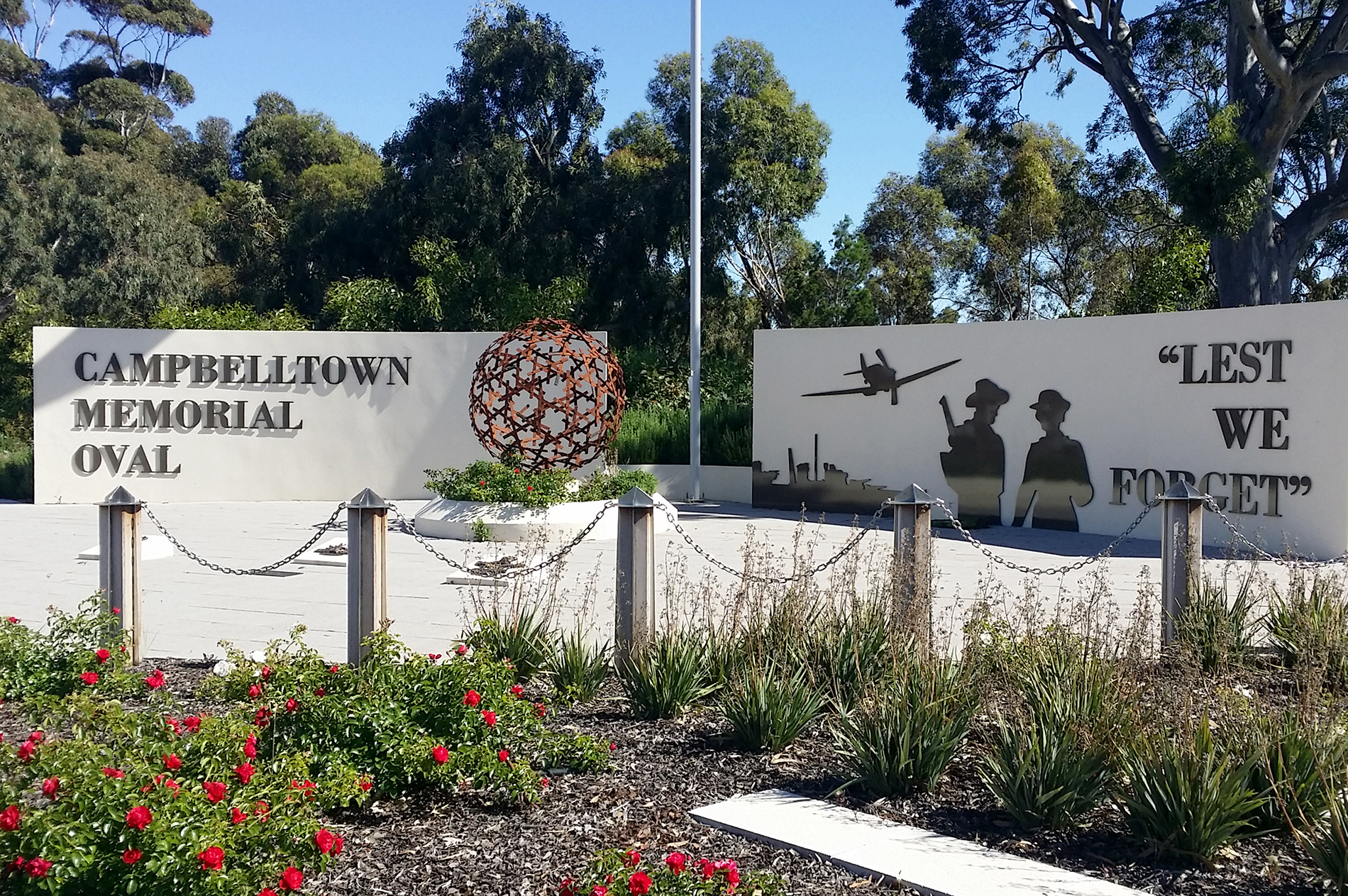
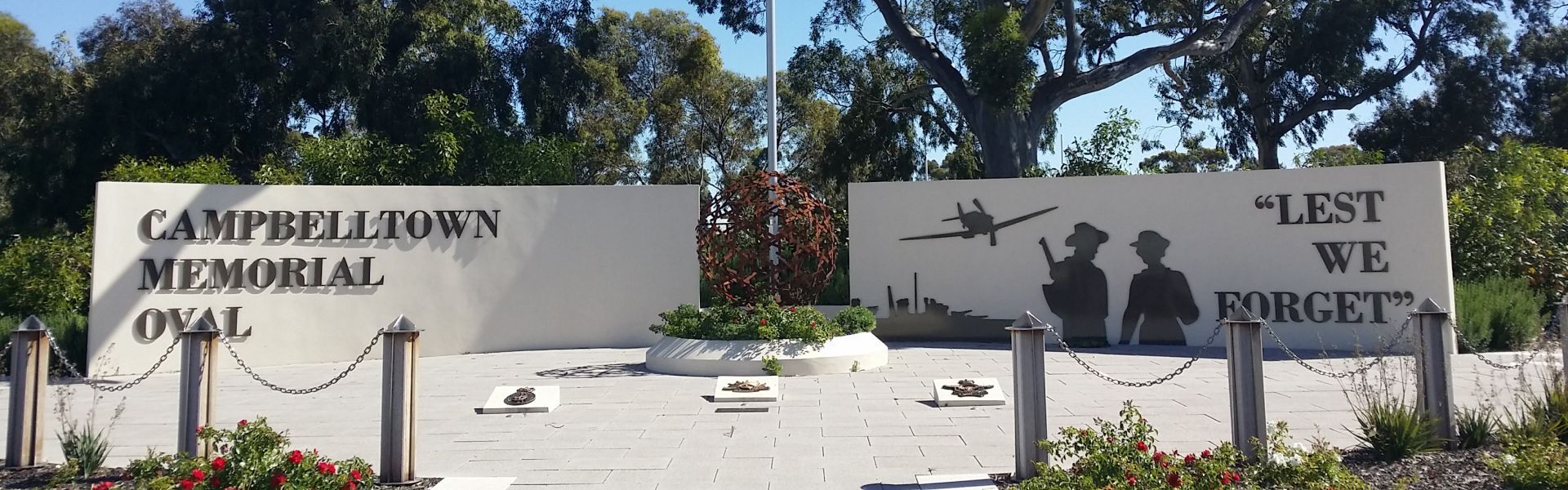
Location: Campbelltown Memorial Oval, Corner of Darley and Lower North East Roads, Paradise
Conflicts: Second World War, 1939–1945
Dedicated: Sunday 16 August 2015, by Rear Admiral the Honourable Kevin Scarce AC CSC RAN (Retired)
The land where the memorial stands was named Campbelltown Memorial Oval in 1948 to commemorate those who served in World War II. However, no official memorial was established at that time to acknowledge the reasons behind the name.
In November 2013, Council passed a motion for staff to design a World War II memorial at the site, and the memorial was subsequently built and dedicated in 2015.

Location: The Gums Reserve, Shakespeare Avenue, Tranmere
Conflicts: First World War, 1914–1918 and Second World War, 1939–1945
Dedicated: Sunday 14 November 1920, by Brigadier General Raymond Lionel Leane
Unveiled in 1920, the marble memorial stood at Magill School, corner of Magill Road and Pepper Street, Magill. At that time, Magill referred to a large undefined area encompassing most of the cities of Burnside and Campbelltown.
The memorial list the names of those who enlisted from the district and made the supreme sacrifice during World War I. A plaque was later added to commemorate those from the district who died in service during World War II.
In 1956, the memorial was moved to the corner of Magill Road and Penfold Road, Magill. The memorial was restored and rededicated in 1966.
In late 2021 at the request of the Magill RSL, the memorial was relocated to its current site at The Gums Reserve in Tranmere.

Location: Wadmore Park/Pulyonna Wirra, Addison Avenue, Athelstone
Conflicts: Second World War, 1939–1945
Dedicated: Sunday 13 September 2015 by Deputy Mayor Marijka Ryan
Wadmore Park/Pulyonna Wirra, Athelstone has a rich military history.
When the Second World War began in the late 1930’s, the land was used as a training ground by a wide range of rifle clubs and military units.
In 1942, the north western corner of the site was occupied by the 123 Australian Special Hospital. The hospital was comprised of 20 pre-fabricated huts and nearly one hundred tent sites. By 1943, an ornamental garden had been established on the grounds, comprising of sunken gardens, a rockery, large fish ponds, and an avenue of 45 Chinese elm trees that lined the main entrance. The hospital remained in operation until 1947. After its closure the tents and buildings were removed from the site, leaving only the garden.
By 2014, the Chinese elm trees had largely been reduced to dead tree trunks, with some remnants of stone edging. In 2015, the avenue was replanted, this time with South Australian blue gums. The gum trees were propagated from seeds collected on the site by the Landcare Association of South Australia.
The Avenue of Honour recognises those from the area who enlisted and served in war to protect Australia’s freedom and way of life. It acknowledges not only the men and women who served and perished in conflict, but also those who returned and their journey through rehabilitation and reconnection with the community.