
Trees
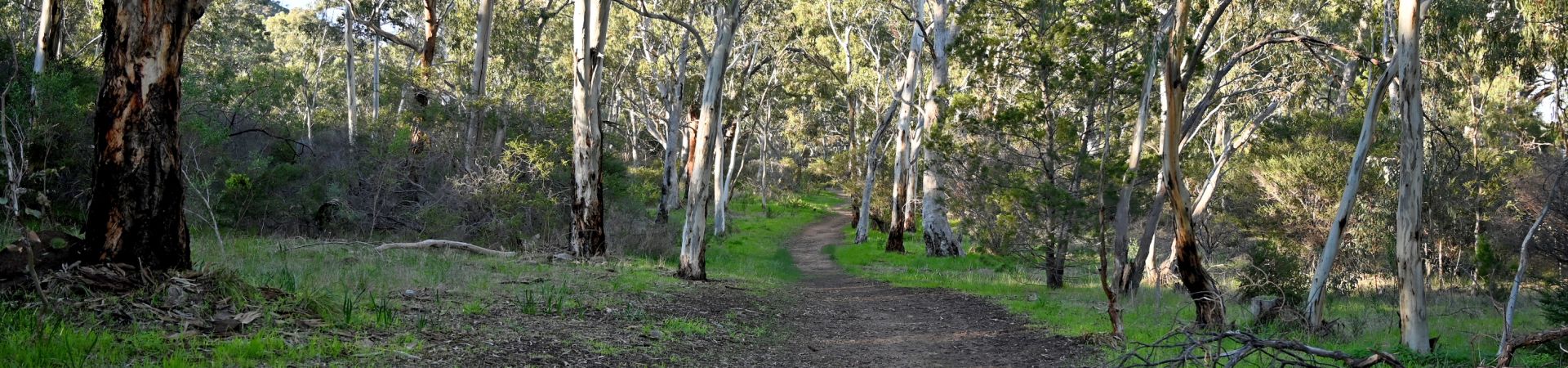
Trees play a vital role in our community and provide us with many benefits. Not only do they enhance the beauty of our neighbourhoods and create a sense of place, they also improve air quality, provide habitat for wildlife, cool our streets and homes during heatwaves, increase property values, hold cultural and historical value, reduce local flooding and wind, improve our mental health, and much more.
You can enjoy the many benefits trees provide right in your own garden. Consider where you can plant a new tree, introduce a potted one, or increase overall greening on your property.
We are committed to caring for our existing trees, while planting new ones to ensure future generations benefit too from this urban forest.
Council cares for over 36,000 trees. Our Urban Forest Strategy outlines our target to increase our urban tree canopy by 20% by 2045. This aligns with State Government's target to increasing canopy cover as part of the Greater Adelaide Regional Plan.
We plan to achieve this through:
- planting a minimum of 1,200 trees every year
- mapping all our street trees
- selecting species suitable for the changing climate
- advocating for stronger tree laws
- providing incentives for private tree protection
- undertaking community tree-planting activities
- measuring tree canopy change and urban heat islands
- investing in better tree protection in our parks and streets, and
- collaborating for best practice management and outcomes.
Read more:
Trees provide benefits over many generations, so we carefully plan and select trees to ensure they thrive and survive for the long term. We try to plant at least 1,200 trees each year on our streets, parks and reserves.
How can I request a street tree?
If you want to request a tree outside your house, visit our request a service page.
Staff will endeavour to include it in the next planting season.
Are there trees planned for my street?
If you want to find out if there are any trees planned on your street, and what the existing tree species are, you can find out by searching for your address on our interactive map.
How do we select what species we plant?
Many factors are considered to determine street tree species selection by our team of arborists. Overall, we want to have a diverse range of species that:
- provide lots of shade for pedestrians and the street
- will cope better in dryer and hotter conditions
- have tolerance to disease and pests
- have low maintenance requirements
- reflect the local culture, heritage and sense of place
- make the streets look beautiful
- provide habitat and corridors for local wildlife.
This results in a mixture of indigenous and exotic tree species, including both trees that keep leaves all year and those that lose them in Autumn.
How do we prioritise areas to plant?
Our street tree planting program begins in Autumn while the soil is still warm and plants have time to build resilience before the summer. The locations for planting are selected by prioritising areas that:
- have lower canopy coverage
- are hotter during heatwaves
- have higher populations of vulnerable people
- provide walkable connections between nursing homes, shops, bus stops and schools.
Each year we also plant many individual trees all over Campbelltown, reflecting:
- requests from residents
- replacements after development
- replacements for dead or diseased trees
- where species are no longer suitable
- road upgrades.
What about my street?
Council aims to plant at least one tree outside of each property, as this adds up to create the beautiful canopy that attracts people to our Council area. If you do not have a tree on your verge, you can request one and it will be assessed for the upcoming planting season.
The exact species planted may depend on:
- the available space and soil type in the verge and street
- services above ground for the canopy, and below ground for the roots
- whether we can create more space for the tree.
We use various tools and legislation to help us make these decisions, including:
- Urban Heat and Tree Canopy mapping tool
- Which Plant Where
- Future Trees project
- Creating more spaces for trees
- Street Tree Species Guideline
- Local Government Act 1999
- Powerlines - Electricity Act 1996
- Electricity (Principles of Vegetation Clearance) Regulations 2010
- Water Industry Regulations 2012.
Watch this video to understand more.
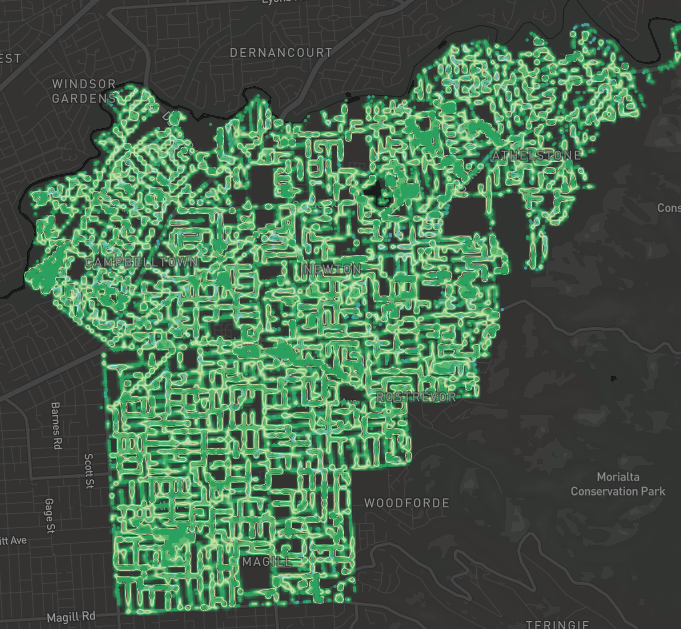
Visit our interactive map to find out all about Campbelltown’s urban forest. Zoom in to your street or areas you like to walk on our interactive map.
You will be able to look at:
- total numbers of street trees we have mapped
- number of street trees planted in the last year
- species and how common they are
- which trees are on your street
- planned planting spots.
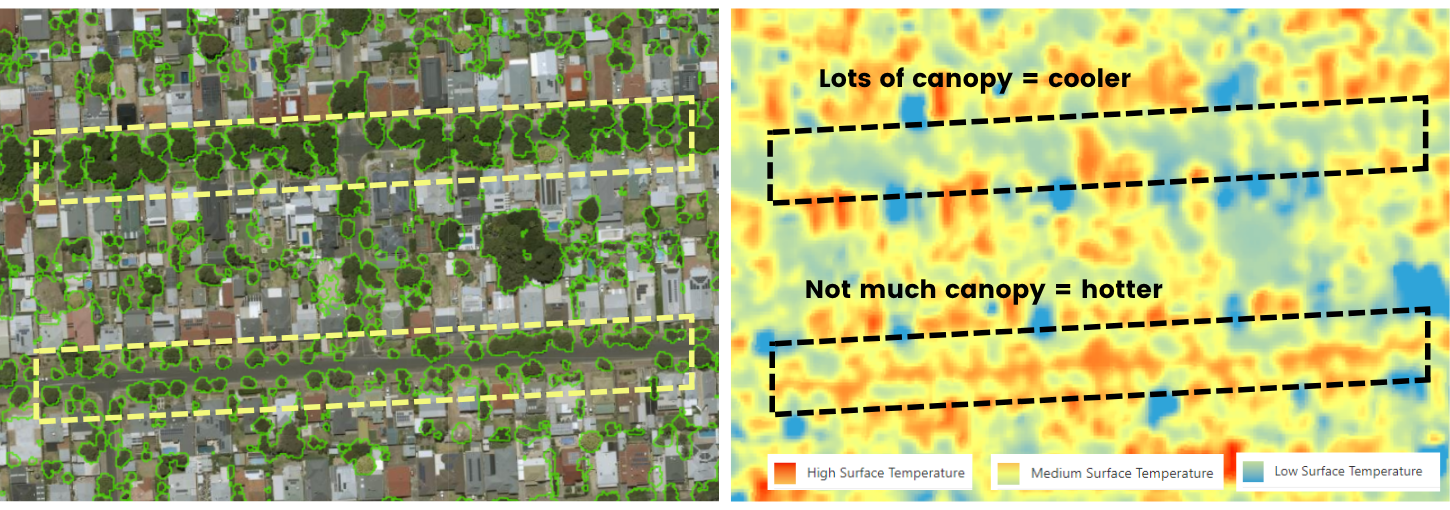
Tree canopies are vital for cooling our urban areas in hot weather. They do this by shading and cooling the air through their leaves.
These cooling benefits are best when the tree is in good health and condition. This is why we have teams of people to maintain and protect our trees for the future.
The Urban Heat and Tree Mapping Viewer shows you this cooling effect. It compares the surfaces and vegetation around your home.
Council uses this evidence to plan our street tree planting, as a core priority is to target areas of high urban heat, which often correlates with low canopy coverage.
Here is an example of streets that show young and smaller trees, compared with older and larger trees, to show the long-term effects of tree planting and cooling in a neighbourhood.
You can learn more about heat mapping and local materials with our Heat Mapping Factsheets.
Our team maintains trees in streets, reserves and creeks throughout our public land. We aim to keep trees in a healthy and safe condition.
All trees are inspected and pruned as part of our ongoing maintenance program, and as required. We ask that residents do not prune, remove or alter street or reserve trees in any way.
Tree inspections
Our arborists do regular health checks and risk audits for all Council’s trees. The timeframe varies from tree to tree. It depends on the type, location, age, and how many people use the area. If our arborists determine that a tree is at a greater risk, they audit it more often.
We identify trees that need care, pruning, or removal. We also check for signs of disease, pests, or storm damage. Our team creates a plan to ensure our trees are safe and healthy.
We appreciate that you still might see a tree more frequently than us, so if you have noticed vandalism, disease, or other issues relating, please request a tree inspection.
Tree pruning
There are many reasons why we prunes trees. Pruning can keep trees healthy and help them live longer. Young trees get extra care and pruning until they are strong and have a good shape. This includes lifting the branches so they are not in the way of the footpath or the road.
We do maintenance pruning to encourage the best tree growth. The timing of pruning depends on the tree species, and whether it is evergreen or deciduous.
South Australian Power Networks (SAPN) inspects and clears trees under powerlines to ensure the safety and reliability of electricity service. Visit the SAPN website for more information, including a map of upcoming pruning areas.
To request that Council assess a tree for pruning, visit our request a service page.
Council will not prune or remove trees for the following reasons:
- to reduce fruit, leaf and other debris
- remove birds or other wildlife
- improve views
- reduce shading of solar panels
- reduce shading of lawns or gardens
- improve visibility of property signage or
- increase street lighting on private property.
Tree watering
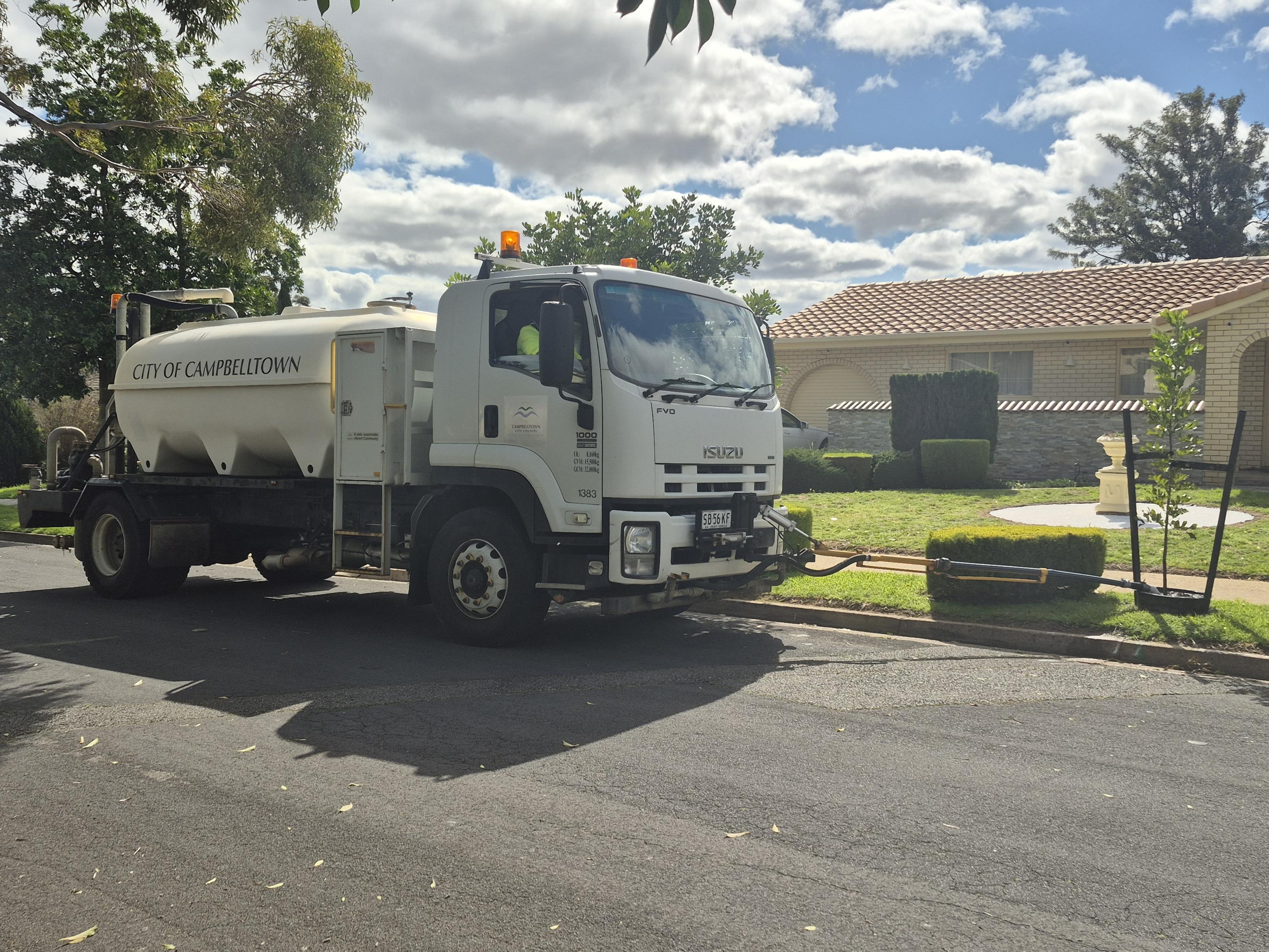
All newly planted trees are watered regularly for the first three years by our watering truck. In hot and dry periods, we encourage you to add water to your nearby street trees. We always appreciate when our community helps.
If this is not an option for you and you are concerned about a tree, you can request a Council tree to be watered on our request a service page.
You can read more about what we are doing to help trees receive more water in the 'Water Sensitive Urban Design' section on this page.
Tree requests
We will investigate requests for tree issues on Council land. Requests may include:
- tree trimming and pruning
- suspicious damage
- tree removal
- tree plantings
- storm damage and debris on bike paths
- Council tree branches fallen on private property.
We will not:
- remove healthy and stable trees
- remove or prune trees to improve your view
- remove or prune trees shading solar panels or your garden
- remove or prune trees to reduce leaf fall, fruit fall or bird droppings
- clean out gutters or prune for debris in gutters
- remove leaves from street trees on private property
- investigate trees on private property.
Reporting a tree issue
If you see a fallen tree, a fallen or hanging branch that is a safety risk to the public, or you notice a tree has been poisoned, damaged or removed in a suspicious way, please contact us as soon as possible.
Council will determine its level of risk and will schedule in the work as required.
Trees and powerlines
If a tree or branch has fallen and is impacting on powerlines or related infrastructure, please call South Australian Power Networks immediately on 13 13 66.
Help for maintaining trees on private land
Council provides assistance for property owners with Regulated and Significant Trees through our Tree Assistance Grants Program.
Property owners must seek out local arborists to provide advice on trees on private property.
Trees on neighbours land
If you have concerns about a tree on someone else’s private land, this is a civil matter. Visit our neighbourly issues page for information about your rights and responsibilities as a neighbour and resolving neighbourly disputes.
We will always aim to keep trees where possible. Sometimes trees need to be removed if they are dying, are infected by disease or pests, pose a risk or are no longer suitable for their location. Alternative actions are investigated before removal is considered.
Street tree removal requests for development purposes are assessed by Council. A Section 221 permit application will be required. If Council supports the tree removal, there is a fee associated with this, which is calculated based on a common formula. This includes the cost of replacing the tree.
To request a tree or stump removal, visit our request a service page.
Watch this video to understand why we DO remove trees.
Watch this video to understand why we might NOT remove a tree.
Where a tree has died, Council may decide to retain the tree for habitat for birds and wildlife. If you think we have not noticed a dead tree, you can report this.
Watch this video to understand why there are dead trees out and about.
Campbelltown’s urban forest comprises more than 15,000 regulated and significant trees. Of these, about a third are on private land. These trees are protected under legislation. In 2024 the laws were amended to improve tree protection.
Protected trees are defined by the size of the trunk, and are typically large, old trees. They provide many community benefits through shade, cooling, beauty, landmarks, and provide habitat for animals and birds.
We regularly inspect our large trees to ensure they are resilient and long-lived.
To find out more about regulated and significant trees, including what protections exist and processes for pruning, maintenance and removal, visit our regulated and significant trees page.
Council provides assistance for property owners with Regulated and Significant Trees through our Tree Assistance Grants Program.
Water Sensitive Urban Design (WSUD) is using water sustainably by incorporating all water sources (rainwater, stormwater, groundwater, mains water, and wastewater) into urban planning and construction.
Learn more about water smart designs at www.resilienteast.com/watersmart.


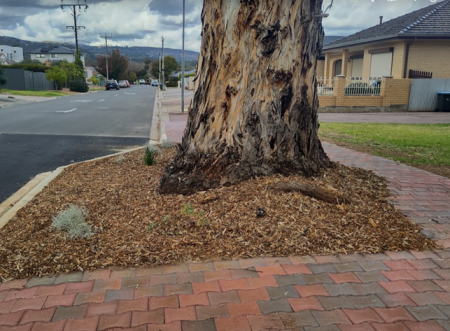

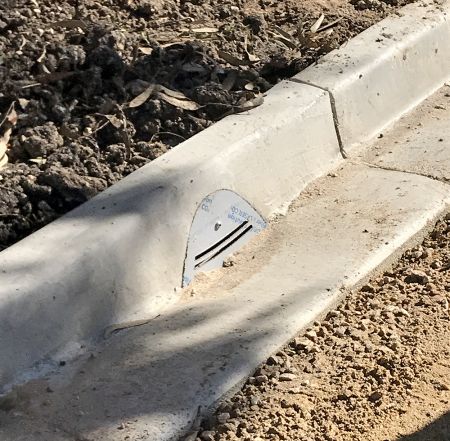
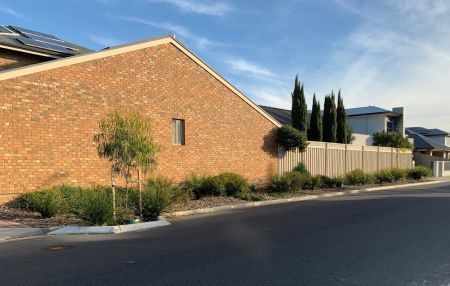
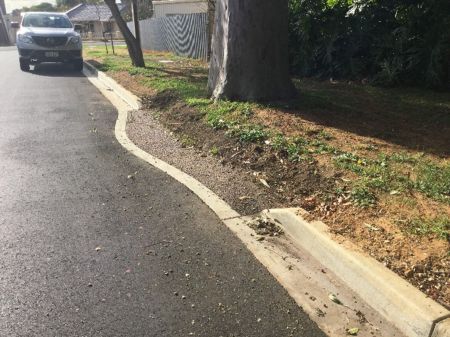
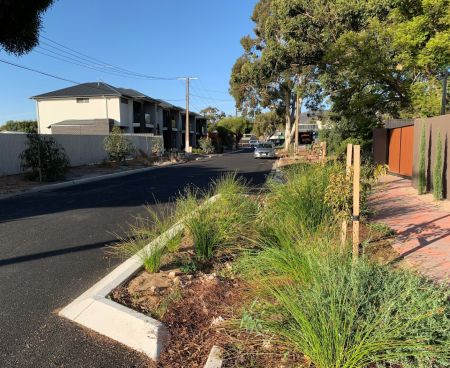
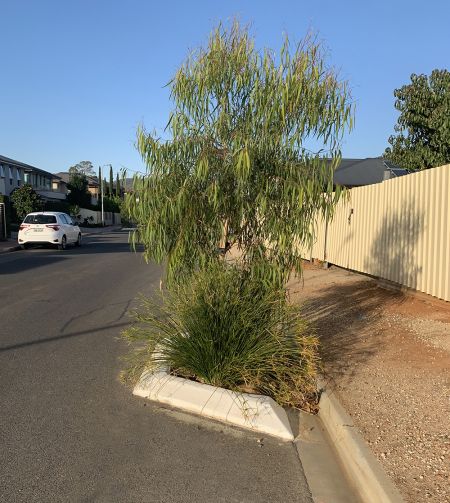
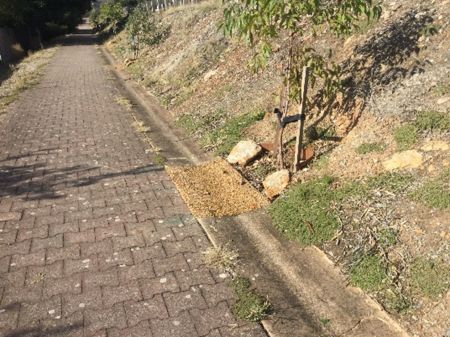
Council installs a range of different WSUD treatments around trees to allow water to reach tree roots (see examples below).
We encourage all residents to plant trees on their own property.
Private land is an important component of ensuring we can keep Campbelltown cooler and greener for future generations. Currently only 40% of Campbelltown’s canopy is on private land.
There are now mandatory tree and landscaping requirements for new homes and renovations in metropolitan Adelaide. While this only became applicable to new builds in 2021, the principles and advice is applicable to many shapes and types of properties, especially if you have moved into a property that was subdivided.
What to plant
It’s good to think about why you want trees before you select and plant them. For example, you can consider whether you want one that:
- provides fruit
- provides shade and cooling for your home and yard in summer, but allows sunlight into your house in winter
- provides habitat now or in the future for birds and other creatures
- provides screening and privacy from your neighbours or the street
- a children's swing can be hung from.
Resources:
From 2025 to 2028 we are partnering with Conservation Volunteers Australia (CVA) to provide opportunities for the community to get involved in tree planting and other activities, including our annual National Tree Day event. You can learn more about these partnerships, activities and many other local biodiversity volunteering opportunities on our biodiversity partnerships page.
Planting season is usually from April until September, but there might be other weeding and mulching activities you can get involved in. Check it out at:
Watch our highlights videos from recent projects to learn why tree planting days are so important for improving our tree canopy, biodiversity and community involvement.
Campbelltown hosts National Tree Day planting events at the end of July. We work with our local community groups to make these days a success. Sign up to the Campbelltown Catch up monthly newsletter to ensure you are reminded every winter to book in for our annual event.
Watch the video from 2025’s National Tree Day as part of the Urban Shade Forest Project.